
Top seller

No results were found for the filter!
 QuicRun WP10BL80-G2 ESC 80A 2-4s
Hobbywing QuicRun WP 10BL80 Crawler ESC Waterproof electronic speed controller for RC models and model ship propulsion systems The Hobbywing QuicRun WP 10BL80 Crawler is a powerful electronic speed controller (ESC) for 1/10 scale RC models that supports both brushless and brushed motors . With a continuous current capacity of 80 A and...
46.90€ *
 QuicRun WP12BL45 G2 45A Brushless ESC 2-3S
Hobbywing QuicRun WP 12BL45 G2 Brushless Speed Controller The Hobbywing QuicRun WP 12BL45 G2 is a compact and powerful sensorless brushless speed controller designed specifically for 1/12 and 1/14 RC vehicles . It is ideal for users who are looking for a reliable and easy-to-use controller for everyday use. Thanks to its waterproof...
32.90€ *
 Seaking 300A High Power Boat ESC 5-14s
Seaking 300A 14S High Power ESC High performance ESC with water cooling and Bluetooth Control With immense power and explosive acceleration, the 4th generation Seaking offers excellent linear throttle response and effortlessly handles high load applications and provides precise, responsive control. With an IP67 rating, this controller...
264.90€ *
 Seaking 90A V4 brushless ESC
Seaking 90A brushless ESC power controller with water cooling and data logging Maximum reliability and durability, 4th generation Hobbywing Seaking series ESCs. The Seaking controller series has been designed for use in fast boats. All regulators are water-cooled and have generously dimensioned connection nipples for the silicone hose....
59.90€ *
 Seaking 60A V4 brushless ESC
Seaking 60A brushless ESC power controller with water cooling and data logging Maximum reliability and durability, 4th generation Hobbywing Seaking series ESCs. The Seaking controller series has been designed for use in fast boats. All regulators are water-cooled and have generously dimensioned connection nipples for the silicone hose....
44.90€ *
 Brushless ESC Seaking 120A
Seaking 120A brushless ESC power controller with water cooling and data logging Maximum reliability and durability, 4th generation Hobbywing Seaking series ESCs. The Seaking controller series has been designed for use in fast boats. All regulators are water-cooled and have generously dimensioned connection nipples for the silicone...
78.90€ *
 Seaking 160A V4 Boat ESC Watercooling
Seaking 160A brushless ESC power controller with water cooling and data logging Maximum reliability and durability, 4th generation Hobbywing Seaking series ESCs. The Seaking controller series has been designed for use in fast boats. All regulators are water-cooled and have generously dimensioned connection nipples for the silicone...
110.90€ *
 LCD Program Logging Box PRO
Hobbywing LCD programming card and data logging box The multifunctional LCD programming box Pro with its 2.8'' LCD screen offers the possibility to programme brushless speed controllers quickly and easily. On the Fly (OTA) - data and settings can be made wirelessly via the mobile APP HW Link V2. The box can also be connected to...
38.90€ *
 Seaking 30A V4 brushless ESC
Seaking 30A brushless ESC power controller with water cooling and data logging Maximum reliability and durability, 4th generation Hobbywing Seaking series ESCs. The Seaking controller series has been designed for use in fast boats. All regulators are water-cooled and have generously dimensioned connection nipples for the silicone hose....
26.90€ *
 OTA Bluetooth Programmer
Hobbywing OTA Bluetooth programmer With the OTA programming module, some Hobbywing controllers can be programmed intuitively and without opening the model. The module is plugged into the controller's port for the programming card. The controller is connected wirelessly to a smartphone via the Bluetooth signal sent by the module....
31.90€ *
 Seaking 200A High Power Boat ESC 5-14s
Seaking 200A 14S High Power ESC High-performance controller with water cooling and Bluetooth control With immense power and explosive acceleration, the 4th generation Seaking offers excellent linear throttle response and effortlessly handles high-load applications, providing precise, responsive control. With an IP67 protection class,...
198.90€ *
 Shark G2 40A 2-4S ESC watercooling
32-Bit-Shark G2 40A ESC 2-4S with integrated SBEC 5V/6V 4A Microprocessor-controlled, water-cooled boat controller for brushless motors. The controller is waterproof and glued, the flat water cooling design ensures efficient heat dissipation. Super-smooth start and precise throttle linearity make the controller suitable for all types...
25.95€ *
 Shark G2 50A 2-4S ESC watercooling
32-Bit-Shark G2 50A ESC 2-4S with integrated SBEC 5V/6V 4A Microprocessor-controlled, water-cooled boat controller for brushless motors. The controller is waterproof and glued, the flat water cooling design ensures efficient heat dissipation. Super-smooth start and precise throttle linearity make the controller suitable for all types...
27.95€ *
 Shark G2 60A 2-6S ESC watercooling
32-Bit-Shark G2 60A ESC 2-6S with integrated SBEC 5V/6V 8A microprocessor-controlled, water-cooled boat controller for brushless motors. The controller is waterproof and glued, the flat water cooling design ensures efficient heat dissipation. Super-smooth start and precise throttle linearity make the controller suitable for all types...
43.95€ *
 Shark G2 80A 2-6S ESC watercooling
32-Bit-Shark G2 80A ESC 2-6S with integrated SBEC 5V/6V 8A microprocessor-controlled, water-cooled boat controller for brushless motors. The controller is waterproof and glued, the flat water cooling design ensures efficient heat dissipation. Super-smooth start and precise throttle linearity make the controller suitable for all types...
56.95€ *
 Shark G2 100A 2-6S ESC watercooling
2-Bit-Shark G2 100A ESC 2-6S with integrated SBEC 5V/6V 8A Microprocessor-controlled, water-cooled boat controller for brushless motors. The controller is waterproof and glued, the flat water cooling design ensures efficient heat dissipation. Super-smooth start and precise throttle linearity make the controller suitable for all types...
66.95€ *
 Programming card for ZTW ESC G2 and More
Programming card for ZTW controllers Card for programming the controller of the named series. In addition, the device is a battery checker and can be used as a tester for servos. The card also has a data logging function that can be used to monitor functions and detect shutdown operations (Temp/LowBatt/Range) of the controller....
27.95€ *
 Seaking 180A Boat ESC V3 2-6s
The Hobbywing QuicRun WP 10BL120 G2 is a high-performance, water-resistant brushless speed controller designed for demanding RC applications. With 120 A continuous current , compatibility with 2–4S LiPo batteries and a powerful integrated BEC, it offers ample power reserves for high-performance brushless motors. A special feature of...
52.90€ *
 Xerun AXE Plus R3 Regler 135A/6S
Erleben Sie den Hobbywing XeRun AXE R3 Brushless Regler: Ideal für Rock Crawler, Scale Trucks, Trail Trucks und Schiffsmodelle. Mit FOC-Technologie, wasserdichtem Design und Bluetooth-Programmierung.
99.90€ *
 ESC 70 Smart RC Speed Controller
The ISDT ESC 70 is a high quality speed controller (ESC) for use in RC models such as cars, rock crawlers and of course model boats that need to be controlled sensitively. The ESC 70 has a high current capability of up to 70(120) amps and is equipped with an advanced microprocessor for fast response time and precise control. ISDT's...
27.49€ *
 ESC 90 Smart RC Speed Controller
The ISDT ESC 90 is a high quality speed controller (ESC) for use in RC models such as cars, rock crawlers and of course model boats that need to be controlled sensitively. The ESC 90 has a high current capability of up to 90(180) amps and is equipped with an advanced microprocessor for fast response time and precise control. ISDT's...
29.99€ *
 Brushless ESC QuicRun WP 16BL30 G2
QuicRun Regler WP10BL60 Brushless 60A Sensorless Fahrtregler mit Lüfter für bürstenlose Motore
27.90€ *
 60A brushless ESC QuicRun WP10BL60 G2
QuicRun Regler WP10BL60 Brushless 60A Sensorless Fahrtregler mit Lüfter für bürstenlose Motore
47.90€ *
 Navy Control 540 R Speed Control ESC
Leistungsstarker Fahrtenregler für Schiffe Schiffsregler 6-18 Zellen 6-28V
79.00€ *

 Brushless Regler Seaking 30A V3
Brushless Regler 30A bis 3S wasserdicht Fahrtregler Brushless Bootsregler für RC Modellschiffe BL Regler
32.90€ *
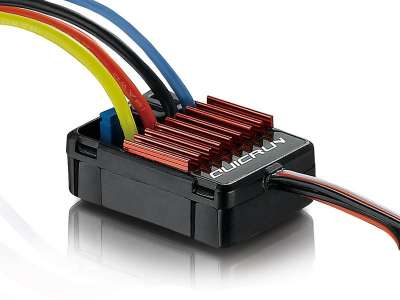 Quicrun 1625 brushed 25A
Regler für herkömmliche Bürsten Motoren mit 25A dauer Betrieb. gut geeignet für kleine Antriebe und Querstrahlruder Fahrtregler Bootsregler für RC Modellschiffe
22.90€ *
 Dual motor ESC QuicRun WP880 80A
Hobbywing QuicRun 880 Dual 80A brushed ESC – waterproof, dual output speed controller for RC boats and cars, supports LiPo, NiMH and Pb batteries.
39.90€ *
 Boat ESC Quicrun 1060 brushed 60A
Regler für herkömmliche Bürsten Motoren mit 60A dauer Betrieb. Fahrtregler Bootsregler für RC Modellschiffe
24.90€ *
 Programming card Seaking
Bietet diverse Einstellmöglichkeiten für fast alle Regler der SeaKing-Serie
14.90€ *
Viewed