Ship Propulsion Shaft Systems

Ship Propulsion Shaft Systems in Model Building: Tips, Materials, and Methods for Achieving Realistic Results

In model shipbuilding, the propulsion shaft system plays a central role in creating a detailed and fully functional scale ship. Whether you’re aiming for a historical sailing vessel, a modern motorized boat, or a meticulously accurate passenger liner replica, the shaft arrangement affects not only the overall appearance but also the vessel’s handling and durability. Below, you’ll learn what’s important when planning, installing, and maintaining ship shaft systems in model building.

Why a Precise Propulsion Shaft System is So Important in Model Building

The ship’s propeller shaft transmits power from the motor to the propeller. A precise and stable shaft setup ensures that the power is utilized efficiently, while preventing vibrations and imbalances. This leads to optimal performance and smoother, quieter operation. A properly aligned shaft system also extends the lifespan of the entire drivetrain. In model building, where high-quality components are often used, careful planning and installation are well worth the effort.

Materials and Components for Model Ship Shaft Systems

Model builders can choose from various materials and construction methods. Brass or stainless-steel shafts are commonly used, as they are both robust and corrosion-resistant. The shaft itself rotates within a shaft tube, often made of brass or a highly wear-resistant plastic. Bearings—either sleeve bearings or ball bearings—and specialized seals are placed between the shaft and the tube to keep water out and maintain a smooth rotation.

When selecting propellers, it’s important to consider not only the material (brass, plastic, or aluminum) but also the diameter, pitch, and number of blades. These factors significantly influence the model’s performance. The coupling to the motor is also crucial: precise alignment prevents vibrations. Flexible couplings made of rubber or plastic can compensate for slight misalignments.

Planning and Installing the Propulsion Shaft

Careful planning is essential before starting the installation. Begin by determining the model’s scale to select the appropriate shaft length, diameter, and type. Position the shaft so that it runs parallel to the waterline, minimizing the angle to the motor. This makes later adjustments easier and reduces unwanted mechanical stresses.

When installing, it’s best to start with a temporary setup and only permanently secure the components after thorough test runs. Precision is key: even minor misalignments can produce noticeable vibrations. Using gauges, measuring tools, and a laser can help ensure that the shaft is perfectly aligned.

Maintenance and Care for Long Service Life

To enjoy your model ship for a long time, devote attention to maintaining the shaft system. Regular lubrication of bearings and seals with special grease prevents friction and wear. After each outing, check the system for damage, foreign objects, or signs of water ingress. Replace seals and readjust bearings as needed.

Occasionally running the drive system on a test bench—without water—can help detect imbalances or alignment issues early on. Listen carefully for unusual noises and watch for excessive heating of components. Making minor corrections and adjustments ensures that the shaft system continues to operate optimally over the long haul.

Implementing Model Ship Shaft Systems Successfully

A well-planned, precisely installed, and properly maintained propulsion shaft system is the heart of every fully functional scale ship model. With the right choice of materials, exact alignment, and regular maintenance, you can not only optimize the ship’s performance but also extend the entire model’s lifespan. This turns a simple hobby project into a high-quality, realistic-looking scale masterpiece—a source of pride for any model builder who masters the demanding art of ship shaft installation.

« show less
Ship Propulsion Shaft Systems in Model Building: Tips, Materials, and Methods for Achieving Realistic Results In model shipbuilding, the propulsion shaft system plays a central role in creating a detailed and fully functional scale ship. Whether you’re aiming for a historical sailing vessel, a modern motorized boat, or a meticulously accurate passenger liner replica, the shaft... read more »
Close window
Schiffswellenanlagen Schiffsmodelle

Ship Propulsion Shaft Systems in Model Building: Tips, Materials, and Methods for Achieving Realistic Results

In model shipbuilding, the propulsion shaft system plays a central role in creating a detailed and fully functional scale ship. Whether you’re aiming for a historical sailing vessel, a modern motorized boat, or a meticulously accurate passenger liner replica, the shaft arrangement affects not only the overall appearance but also the vessel’s handling and durability. Below, you’ll learn what’s important when planning, installing, and maintaining ship shaft systems in model building.

Why a Precise Propulsion Shaft System is So Important in Model Building

The ship’s propeller shaft transmits power from the motor to the propeller. A precise and stable shaft setup ensures that the power is utilized efficiently, while preventing vibrations and imbalances. This leads to optimal performance and smoother, quieter operation. A properly aligned shaft system also extends the lifespan of the entire drivetrain. In model building, where high-quality components are often used, careful planning and installation are well worth the effort.

Materials and Components for Model Ship Shaft Systems

Model builders can choose from various materials and construction methods. Brass or stainless-steel shafts are commonly used, as they are both robust and corrosion-resistant. The shaft itself rotates within a shaft tube, often made of brass or a highly wear-resistant plastic. Bearings—either sleeve bearings or ball bearings—and specialized seals are placed between the shaft and the tube to keep water out and maintain a smooth rotation.

When selecting propellers, it’s important to consider not only the material (brass, plastic, or aluminum) but also the diameter, pitch, and number of blades. These factors significantly influence the model’s performance. The coupling to the motor is also crucial: precise alignment prevents vibrations. Flexible couplings made of rubber or plastic can compensate for slight misalignments.

Planning and Installing the Propulsion Shaft

Careful planning is essential before starting the installation. Begin by determining the model’s scale to select the appropriate shaft length, diameter, and type. Position the shaft so that it runs parallel to the waterline, minimizing the angle to the motor. This makes later adjustments easier and reduces unwanted mechanical stresses.

When installing, it’s best to start with a temporary setup and only permanently secure the components after thorough test runs. Precision is key: even minor misalignments can produce noticeable vibrations. Using gauges, measuring tools, and a laser can help ensure that the shaft is perfectly aligned.

Maintenance and Care for Long Service Life

To enjoy your model ship for a long time, devote attention to maintaining the shaft system. Regular lubrication of bearings and seals with special grease prevents friction and wear. After each outing, check the system for damage, foreign objects, or signs of water ingress. Replace seals and readjust bearings as needed.

Occasionally running the drive system on a test bench—without water—can help detect imbalances or alignment issues early on. Listen carefully for unusual noises and watch for excessive heating of components. Making minor corrections and adjustments ensures that the shaft system continues to operate optimally over the long haul.

Implementing Model Ship Shaft Systems Successfully

A well-planned, precisely installed, and properly maintained propulsion shaft system is the heart of every fully functional scale ship model. With the right choice of materials, exact alignment, and regular maintenance, you can not only optimize the ship’s performance but also extend the entire model’s lifespan. This turns a simple hobby project into a high-quality, realistic-looking scale masterpiece—a source of pride for any model builder who masters the demanding art of ship shaft installation.

3 From 3
No results were found for the filter!
Coupling 2.3mm / 3mm Alu
Wellenkupplung 2.3mm auf 3mm Graupner ALU Kupplung
5.90€ *
Coupling 2.3mm / 2mm Alu
Wellenkupplung 2.3mm auf 2mm Graupner ALU Kupplung
5.90€ *
Navy Kardan 44
Navy Kardan 44
Navy Kardan 44 3,2/4 auf 4 mm Doppel-Kreuzgelenkkupplung für Schiffsantriebe
7.60€ *
Stuffing Box 300mm M4
preisgünstige Wellenanlage für Modellschiffe
11.00€ *
Running Hardware 170mm M4
komplette Wellenanlage für RC Modell Schiffe 4mm Edelstahlwelle und M4 Gewinde
9.50€ *
stuffing box M4 290mm BB
kugelgelagerte Schiffswelle , einkürzbar. geeignet für besonders große Modell Schiffe  
52.00€ *
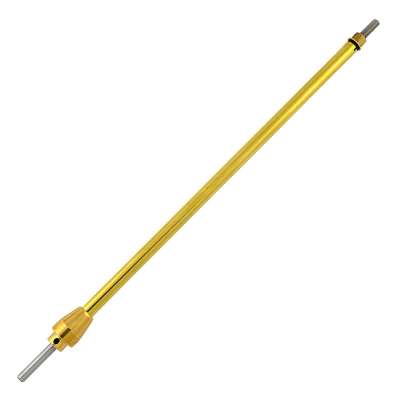
Stuffing Box M4 290mm BB
kugelgelagerte Schiffswelle M5 , einkürzbar. geeignet für besonders große Modell Schiffe  
52.00€ *
Schiffswellenanlage M2 x 153mm Eco
Schiffswelle + Stevenrohr M2 x 153mm Eco
5.50€ *
Kupplungsschlauch
Kupplungsschlauch
Kupplungsschlauch 5x1,2x50 mm Verbindet Wellen von 1,5 bis 2,5 mm Durchmesser
0.50€ *
Propeller Shaft M2x180mm
komplette Schiffswellenanlage M2 mit Bronze und Messing Lagern
24.30€ *
Stuffing Box 290/M4 can be shortened
Schiffswellenanlage mit 290mm und M4 Gwinde. Wasserdicht - kürzbar- wartungsfrei !
37.00€ *
propeller shafts 290/M4 cut to size
wartungsfreie Schiffswellenlage wasserdicht durch G Ring gut kürzbar schlanke Bauart
37.00€ *
Kardan Kreuzgelenk einzeln
Schiffskupplung Kreuzgelenk Kardan Kupplung
8.10€ *
Ship Coupling
Ship Coupling
Ship Coupling
4.50€ *
Navy Kardan 35
Navy Kardan 35
Navy Kardan 35
6.50€ *
Running Hardware 185mm M4
Preiswerte Wellenanlage für Schiffsmodelle. Die 3mm Edelstahl Welle läuft leicht auf 2 Bronzelagern im Messing Stevenrohr. schraubenseitig befindet sich ein Teflon Drucklager. Die Welle wird über einen Stellring motorseitig gesichert.
9.50€ *
Running Hardware 170mm M4
Preiswerte Wellenanlage für Schiffsmodelle. Die 3mm Edelstahl Welle läuft leicht auf 2 Bronzelagern im Messing Stevenrohr. schraubenseitig befindet sich ein Teflon Drucklager. Die Welle wird über einen Stellring motorseitig gesichert.
9.50€ *
Running Hardware 155mm M4
Preiswerte Wellenanlage für Schiffsmodelle. Die 3mm Edelstahl Welle läuft leicht auf 2 Bronzelagern im Messing Stevenrohr. schraubenseitig befindet sich ein Teflon Drucklager. Die Welle wird über einen Stellring motorseitig gesichert.
9.50€ *
Compact Wellenanlage 400/175 M3
Compact Schiffswelle mit sehr gutem Preis/Leistungsverhältnis. Hervorzuheben ist die besonders schlanke Bauart.
16.50€ *
Compact Wellenanlage 600/175 M4
Compact Schiffswelle mit sehr gutem Preis/Leistungsverhältnis. Hervorzuheben ist die besonders schlanke Bauart.
16.40€ *
Compact Marine Driveline 600/220 M4
Compact Schiffswelle mit sehr gutem Preis/Leistungsverhältnis. Hervorzuheben ist die besonders schlanke Bauart.
17.50€ *
Compact Wellenanlage 600/190 M4
Compact Schiffswelle mit sehr gutem Preis/Leistungsverhältnis. Hervorzuheben ist die besonders schlanke Bauart.
16.90€ *
Compact Wellenanlage 280/135 M2
Compact Schiffswelle mit sehr gutem Preis/Leistungsverhältnis. Hervorzuheben ist die besonders schlanke Bauart.
16.50€ *
Compact Wellenanlage 600/175 M3
Compact Schiffswelle mit sehr gutem Preis/Leistungsverhältnis. Hervorzuheben ist die besonders schlanke Bauart.
17.50€ *
Compact Wellenanlage 400/155 M3
Compact Schiffswelle mit sehr gutem Preis/Leistungsverhältnis. Hervorzuheben ist die besonders schlanke Bauart.
16.50€ *
Stevenrohr ABS 290 M4
Edelstahlschiffswelle mit dickwandigem ABS Stevenrohr und Bronze Gleitlagern.
26.00€ *
Stuffing Box MS 450 M5
Schiffswelle mit Stevenrohr
75.80€ *
3 From 3
Viewed