
Top seller


No results were found for the filter!


 Stuffing Box set 300mm M4
 stabile Wellenanlage für große Modell Projekte. Messing Stevenrohr mit 4mm Edelstahl Schiffswelle
12.00€ *
 Compact Wellenanlage 600/250 M4
 Compact Schiffswelle mit sehr gutem Preis/Leistungsverhältnis. passend für 500-600er Motoren bzw. 25mm Lochabstand
18.00€ *
 Stuffing Box set 300mm M5
 stabile Wellenanlage für große Modell Projekte. Messing Stevenrohr mit 5mm Edelstahl Schiffswelle
16.50€ *
 Running Hardware 170mm M4
 komplette Wellenanlage für RC Modell Schiffe 4mm Edelstahlwelle und M4 Gewinde
9.50€ *
 stuffing box M4 290mm BB
 kugelgelagerte Schiffswelle , einkürzbar. geeignet für besonders große Modell Schiffe
52.00€ *
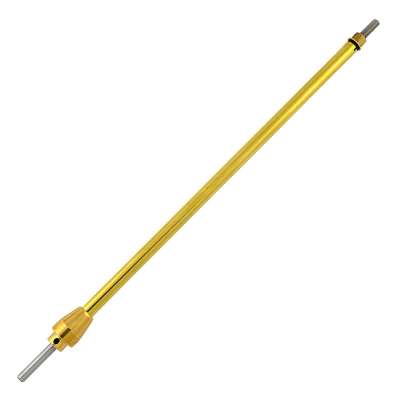 Stuffing Box M4 290mm BB
 kugelgelagerte Schiffswelle M5 , einkürzbar. geeignet für besonders große Modell Schiffe
52.00€ *


 Stuffing Box 290/M4 can be shortened
 Schiffswellenanlage mit 290mm und M4 Gwinde. Wasserdicht - kürzbar- wartungsfrei !
37.00€ *
 propeller shafts 290/M4 cut to size
 wartungsfreie Schiffswellenlage wasserdicht durch G Ring gut kürzbar schlanke Bauart
37.00€ *
 Running Hardware 185mm M4
 Preiswerte Wellenanlage für Schiffsmodelle. Die 3mm Edelstahl Welle läuft leicht auf 2 Bronzelagern im Messing Stevenrohr. schraubenseitig befindet sich ein Teflon Drucklager. Die Welle wird über einen Stellring motorseitig gesichert.
9.50€ *
 Running Hardware 170mm M4
 Preiswerte Wellenanlage für Schiffsmodelle. Die 3mm Edelstahl Welle läuft leicht auf 2 Bronzelagern im Messing Stevenrohr. schraubenseitig befindet sich ein Teflon Drucklager. Die Welle wird über einen Stellring motorseitig gesichert.
9.50€ *
 Running Hardware 155mm M4
 Preiswerte Wellenanlage für Schiffsmodelle. Die 3mm Edelstahl Welle läuft leicht auf 2 Bronzelagern im Messing Stevenrohr. schraubenseitig befindet sich ein Teflon Drucklager. Die Welle wird über einen Stellring motorseitig gesichert.
9.50€ *
 Compact Wellenanlage 400/175 M3
 Compact Schiffswelle mit sehr gutem Preis/Leistungsverhältnis. Hervorzuheben ist die besonders schlanke Bauart.
16.50€ *
 Compact Wellenanlage 600/175 M4
 Compact Schiffswelle mit sehr gutem Preis/Leistungsverhältnis. Hervorzuheben ist die besonders schlanke Bauart.
16.40€ *
 Compact Marine Driveline 600/220 M4
 Compact Schiffswelle mit sehr gutem Preis/Leistungsverhältnis. Hervorzuheben ist die besonders schlanke Bauart.
17.50€ *
 Compact Wellenanlage 600/190 M4
 Compact Schiffswelle mit sehr gutem Preis/Leistungsverhältnis. Hervorzuheben ist die besonders schlanke Bauart.
16.90€ *
 Compact Wellenanlage 280/135 M2
 Compact Schiffswelle mit sehr gutem Preis/Leistungsverhältnis. Hervorzuheben ist die besonders schlanke Bauart.
16.50€ *
 Compact Wellenanlage 600/175 M3
 Compact Schiffswelle mit sehr gutem Preis/Leistungsverhältnis. Hervorzuheben ist die besonders schlanke Bauart.
17.50€ *
 Compact Wellenanlage 400/155 M3
 Compact Schiffswelle mit sehr gutem Preis/Leistungsverhältnis. Hervorzuheben ist die besonders schlanke Bauart.
16.50€ *
 Stevenrohr ABS 290 M4
 Edelstahlschiffswelle mit dickwandigem ABS Stevenrohr und Bronze Gleitlagern.
26.00€ *

Viewed